
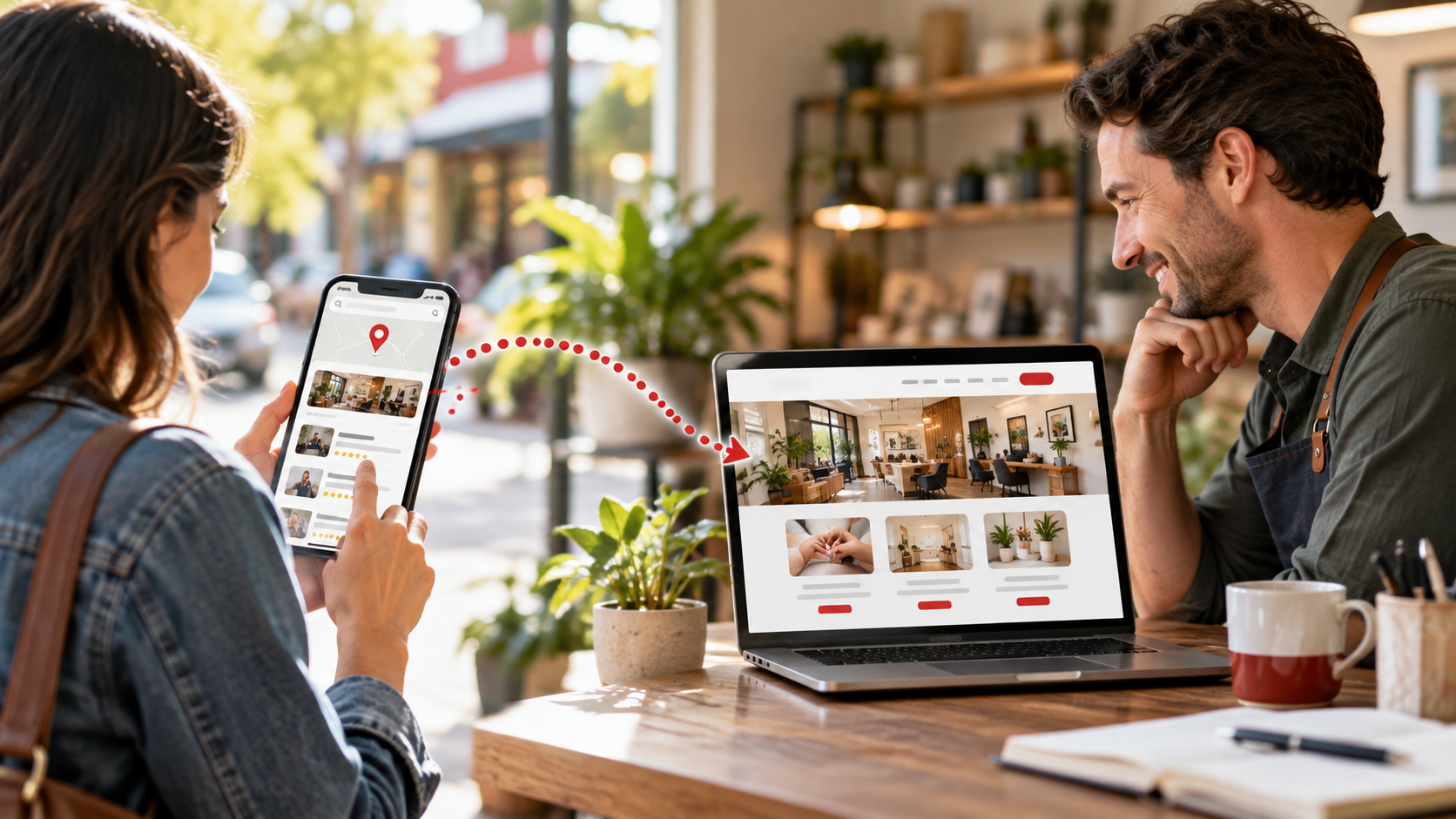
If your business does not have a website, people may still find you through referrals, social media, maps, marketplaces, or directories. Those channels can be valuable. The risk is relying on them as your only online presence: potential customers may have fewer ways to understand what you offer, compare you with alternatives, or take the next step.
A website is not a guarantee of traffic or sales. It is a platform your business can shape to answer questions, describe services, and guide visitors toward a useful action.
Give searchers a place to learn more
People often search a business name after hearing about it from a friend or seeing a post. Without a website, they may find incomplete directory details, outdated references, or profiles that do not explain the full offer. A website lets you publish accurate service information, business hours, locations, policies, examples, and contact options in one place.
Search visibility takes work. Search engines need accessible pages, useful and specific content, and clear signals about the business. A website gives you the foundation to build those pages over time, but it does not instantly place a business at the top of results.
Answer customer questions before a conversation
Visitors may want to know who a service is for, what is included, how the process works, and what to prepare before contacting you. A well-structured site can answer those questions, set expectations, and help filter inquiries. This can make conversations more productive for both the customer and your team.
Helpful pages might include service descriptions, frequently asked questions, a short process overview, examples of work, pricing guidance where appropriate, and clear contact details. Keep claims accurate and current. If a service has limitations, explain them rather than hiding them.
Turn online attention into an inquiry
Social posts can spark interest, but the next step is not always obvious. A focused landing page can connect a visitor’s question to a clear action, such as requesting a quote, scheduling a consultation, or downloading a guide. A short form, visible contact details, and mobile-friendly design make that step easier.
Track meaningful actions rather than page views alone. You may want to understand which pages lead to calls, form submissions, bookings, or purchases. Measurement helps you improve the experience and invest in what supports your goals.
Build an asset your business can improve
Your website can become a growing library of useful material: product or service pages, case studies, guides, articles, event information, and customer resources. Each page can support a different question in the buying process. With a consistent structure and maintenance plan, the site can become more useful as your business and customer needs evolve.
The site still depends on hosting, a domain registrar, software, and security practices. Keep backups, update components, protect administrator accounts, and review pages regularly. Owning a domain and maintaining a website are ongoing responsibilities, but they also give you greater control over how your business is presented.
Start with the customer journey
You do not need a large website to begin. Identify your most important audience, the problem they want solved, the information they need, and the action you want them to take. Build the smallest set of clear pages that supports that journey: a useful home page, service or product pages, an about page, and a contact path.
Then improve the site based on real questions and behavior. Add content when it helps customers make a decision, not simply to fill space. Make sure the mobile experience works, the pages load reliably, and all forms reach the right person.
A website works best as part of a system
Your website should connect with the channels you already use. Social profiles can send visitors to relevant pages; email follow-up can continue a conversation; analytics can show which content helps people take action. A website is not a replacement for every channel. It is the central place where your business can explain its value and direct the next step.
If you are ready to build a website around a specific business goal, request a conversation with Marketing Doors.